
The Revenue Leak Hiding in Plain Sight: When Empathy Meets Accessibility
One in four of your customers lives with a disability you cannot see. Fifteen to twenty per cent are neurodivergent. Around fifteen per cent are navigating your experience in a second or third language.
These are not small groups on the margin. This is your market.
Most organisations do not design for them. Not out of malice. Out of blindness. The experience is built for people who see well, hear well, read fast, cope with noise and never get overwhelmed. Everyone else has to work harder just to get through it.
And when they do not manage, they do not complain. They leave. Quietly.
The customers you are losing without knowing it
A queuing system that works perfectly for most people can be a sensory nightmare for someone with autism. A self-service kiosk designed for speed creates a wall for someone with low vision. A booking process that assumes fluency in your language shuts out fifteen per cent of your international customers. A form that seems simple becomes a barrier for someone with dyslexia. A self-service portal with thirteen clicks to log in is not self-service for someone living with a brain injury.
And when these customers call for help, the agent on the other end cannot see the disability. They do not know the customer has dyslexia and struggled with the form. They do not know about the brain injury that made thirteen clicks feel impossible. All they hear is frustration. They think the frustration is aimed at them. What should have been a simple call becomes a conflict. Neither side understands why.
These customers do not fill in feedback forms. They do not call to complain about the design. They simply do not come back. And because the barriers are invisible to anyone not facing them, the revenue loss never gets diagnosed. Your full potential is never realised. And in reality - the potential of designing for empathy, inclusion and accessibility is much larger than you think.
This is not a "nice to have." It is a business problem.
The instinct is to file accessibility under corporate social responsibility. Something you do because it is the right thing. That framing misses the point entirely.
When you design your experience so it works for the person with a visual impairment, the neurodivergent customer, the non-native speaker, your experience becomes smoother for everyone. Because on any given day, your "average" customer might be stressed, sleep-deprived, going through a divorce, managing chronic pain or caring for a dying parent. Their mental load goes up and the ability to cope is strained in exactly the same way. The same barriers hit them. Different reasons. Same barriers.
Building experiences that work when people are not at their best is not charity. It is commercial sense. Because most people, most of the time, are dealing with something.
Great CX is about designing your customer journey to be as friction free as possible so that the road towards purchase has no obstacles. Stop designing it for the average customer that does not exist. Design for the customers who experience most friction with what you deliver and you will see your results improve across the board.
How Conny Kalcher turned empathy into a growth driver at Zurich Insurance
Conny Kalcher is Chief Customer Officer at Zurich Insurance. She has spent over 30 years at LEGO and Zurich building customer strategies that connect emotional experience to financial outcomes. She opens Experience Management Nordic Summit with how empathy became a measurable growth driver at one of the world's largest insurers.
Insurance is an industry where customer contact often happens at the worst moments of someone's life. A claim after a car accident. A flooded home. The death of a spouse. How the company shows up in that moment determines whether a customer stays for decades or leaves at the next renewal.
Kalcher did not leave that to chance or to individual judgement. She built a model that connects empathetic service delivery directly to retention and revenue growth. She made empathy measurable, trackable and tied to business results. Not as a soft value. As a financial discipline that earns its place at the board table.
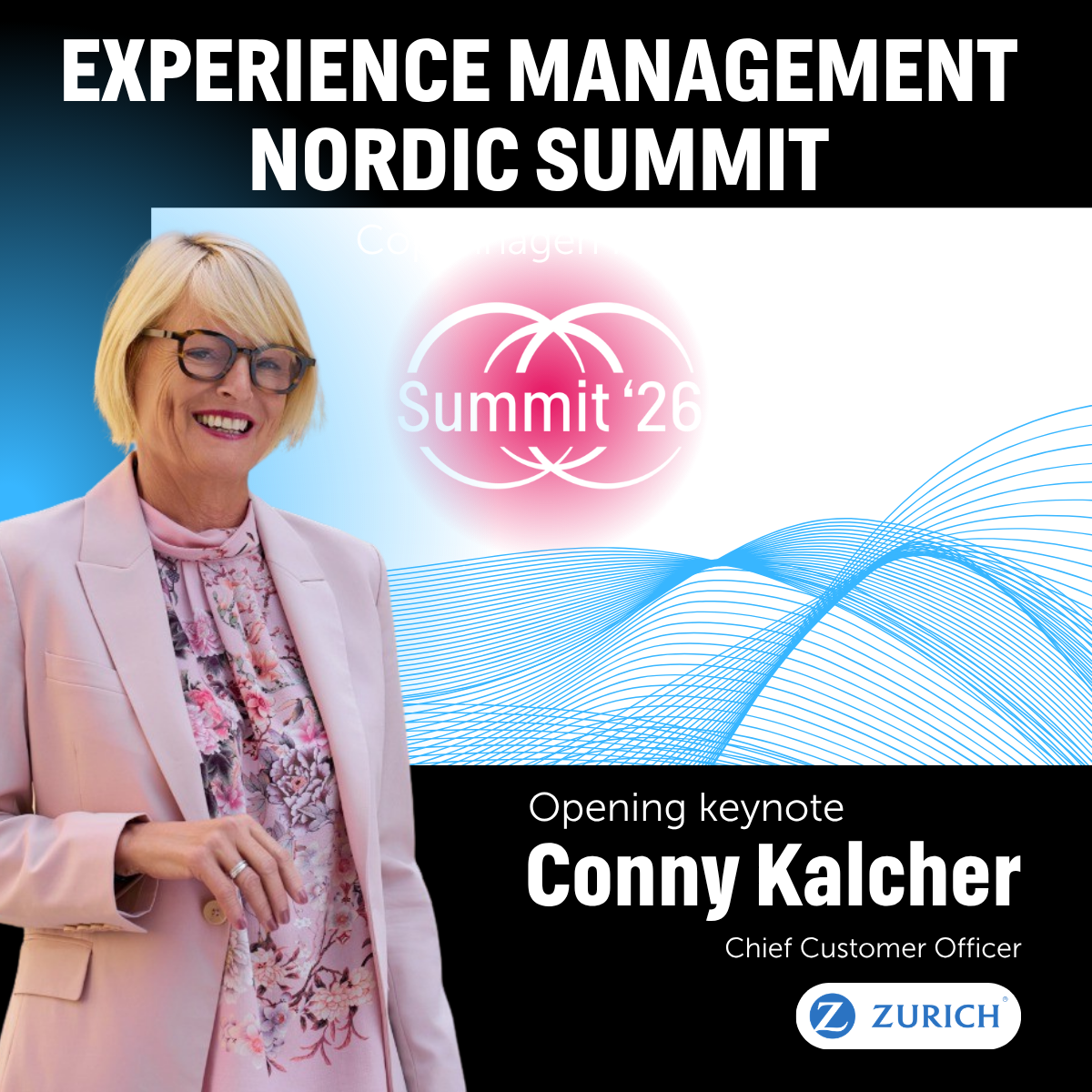
Conny Kalcher
Opening keynote
Her argument: when you truly understand what your customers are going through, you build loyalty that no competitor can buy. And when you do not, you lose people at the exact moment they needed you most.
The barriers your strategy missed
I will be closing the Summit with my keynote: The Silent Revenue Leak: The Market Share You Are Losing to Invisible Barriers. Built on my experience as Nordic Regional Director for the Hidden Disabilities Sunflower, my own 170+ qualitative interviews and operational work on this topic with organisations including Copenhagen Airport, Keolis, The Royal Danish Theatre, LEGO House and Novonesis. The closing keynote maps out where the hidden barriers sit and what removing them looks like in practice.
Two sides of the same insight
Empathy without accessibility is goodwill that never reaches the people who need it most. You care, but your systems exclude. Accessibility without empathy is compliance that feels cold. You tick the box, but the experience still feels hostile.
Connecting the two is where the real business impact sits. Kalcher brings the financial proof. I bring the operational method for finding and removing the barriers that prevent it from landing.
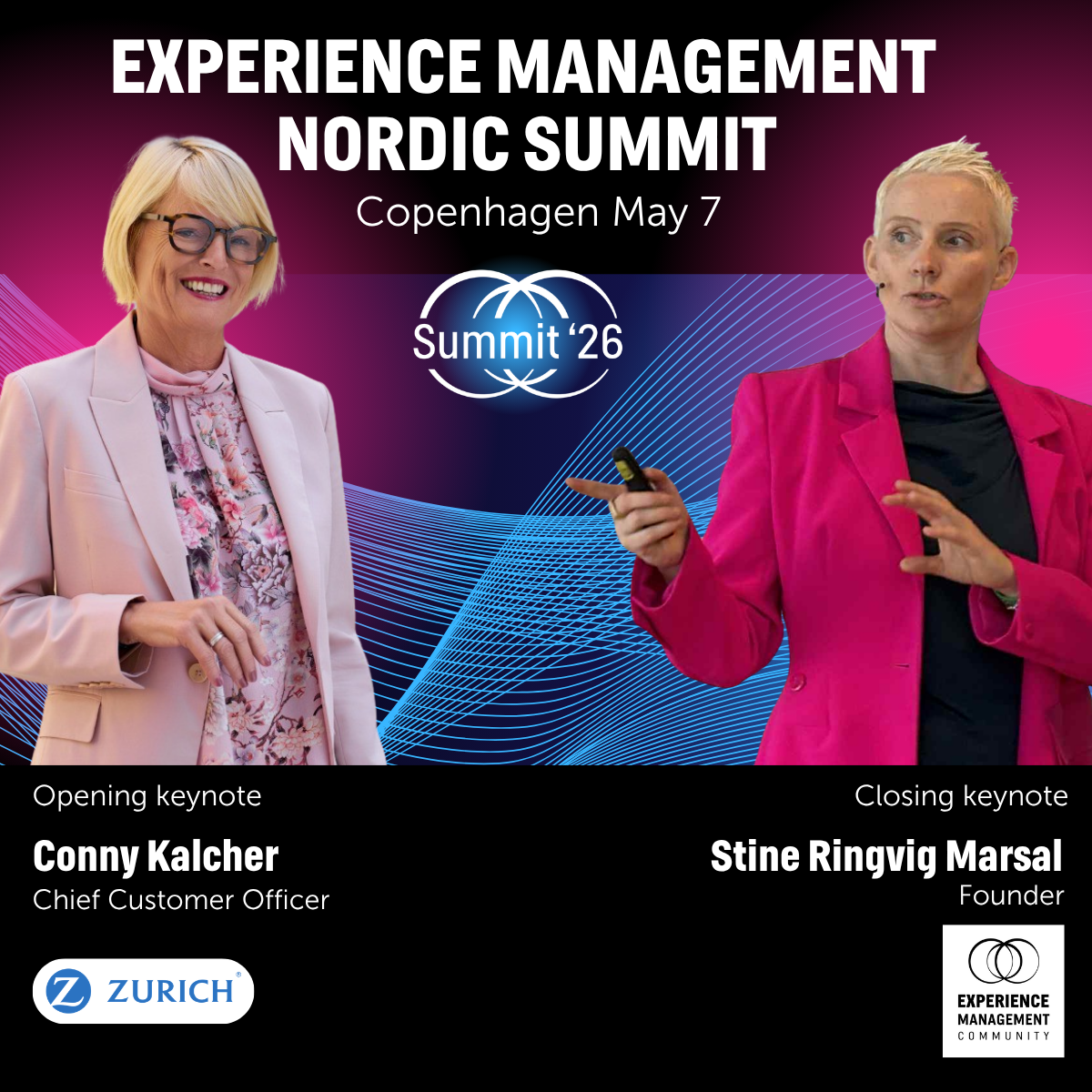
Conny Kalcher & Stine Marsal
Opening and closing keynote
Experience Management Nordic Summit
MAY 7 2026 I COPENHAGEN
If you have not yet connected accessibility and inclusion to your business strategy, you are losing customers you will never hear from. Not because you do not care.
Because the barriers are invisible to everyone except the people facing them.