
What It Actually Takes to Build a Service Culture That Survives Monday Morning
Most service culture programmes follow the same script. An external consultant arrives with great slides. The word "delight" appears fourteen times. Staff leave the workshop energised. Monday arrives and everything is back to normal.
The problem is not the training. The problem is that training was the first thing that happened instead of the last.
Why most service culture efforts fail
If your first impulse when you want to improve your customer experience is to think "we need to service train our staff," your problem is probably not the frontline. It is leadership, strategy and culture.
Service training fails when it lands on an organisation that has no structure to hold it, no leadership routines to maintain it, not culture that actively supports the frontline.
You can teach frontline staff to greet customers differently, to smile more, but if the hiring process does not select for personality, if onboarding does not reinforce it, and if daily leadership routines do not support it, the new behaviour disappears within weeks.
The mistake is treating service culture as something you add on top of operations. It is not. Service culture is how operations run. It needs to be built into habits and culture. When you separate the two, you get a workshop that feels good, cost a lot and changes absolutely nothing.
What the hospitality industry could learn from Airport Security.
Johnnie Muller is Founding Partner of Copenhagen Security Excellence and former Senior Vice President at Copenhagen Airport. He ran a 24/7 security operation with days exceeding 100,000 passengers. Strict compliance requirements. The kind of environment where a motivational workshop lasts about as long as a coffee break.
Yet Copenhagen Airport won World's Best Airport Security Experience four times.
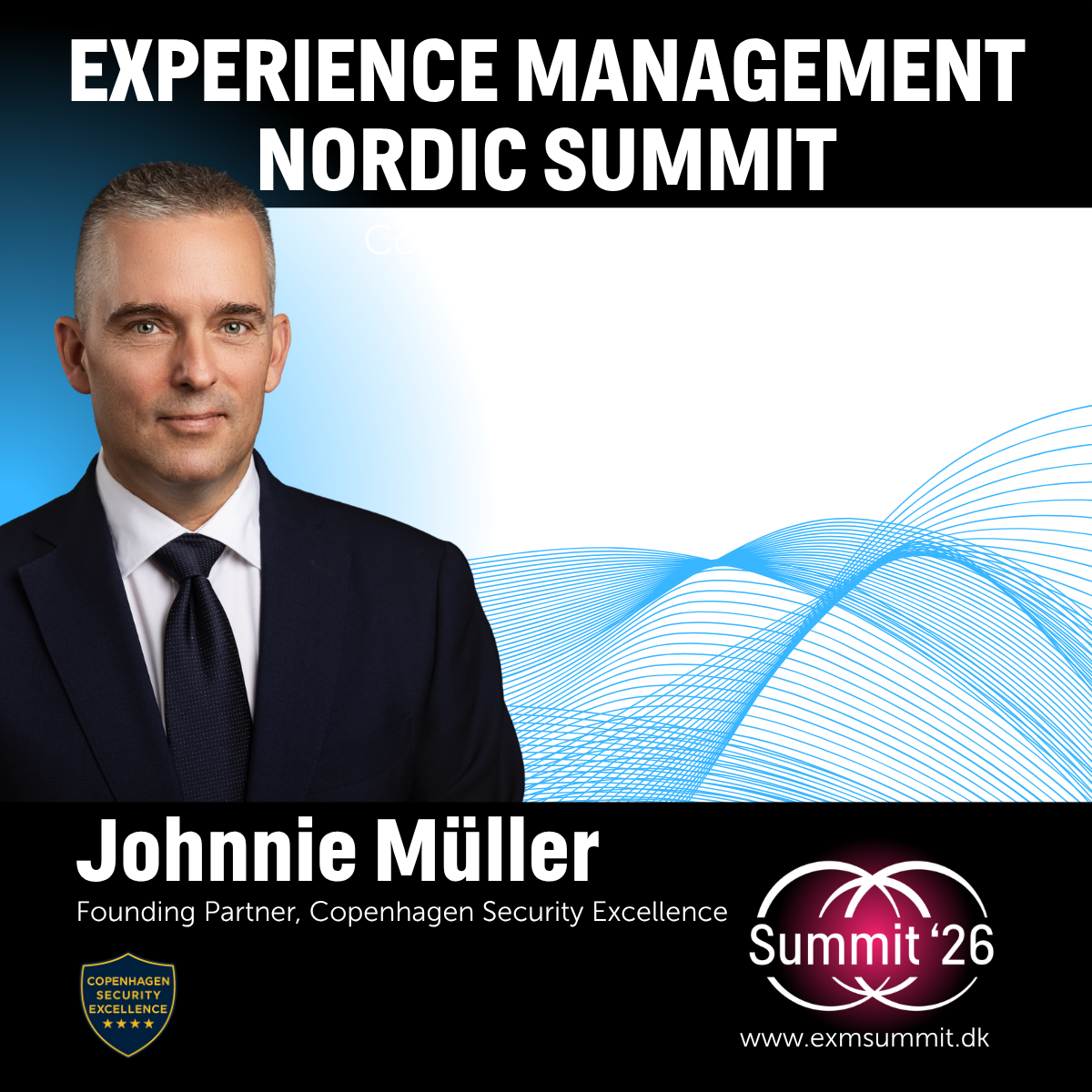
Johnnie Müller
Keynote speaker
Experience Management Nordic Summit
MAY 7 2026 I COPENHAGEN
The shift did not start with service training. It started with the operating model. Hiring was redesigned around behavioural standards. Onboarding was rebuilt to work across shifts. Leadership habits and customer experience focus were built into daily routines.
When I arrived as Service Excellence Director, we linked the effect of service and customer experience to business goals: efficiency, reduction of conflict and complaints. Standard operating procedures were updated to include the desired experience, not just security standards. Service training came last. By the time it arrived, there was something for it to land on. Johnnie had fertilised the soil my CX and service initiatives could grow in.
That sequence matters. Most organisations flip it. They start with the training and hope the culture follows. Muller started with the culture and let the training reinforce it.
How Maersk is embedding customer centricity across 100,000 employees in 180 countries
Marc Degrelle is Global Head of Customer Experience at Maersk. Before Maersk, he spent 23 years at Cisco as Senior Director of Global Operations and EMEA Customer Service, leading shared services and large-scale transformation across six countries. He has 30 years of experience turning culture ambitions into operating reality in global matrix organisations.
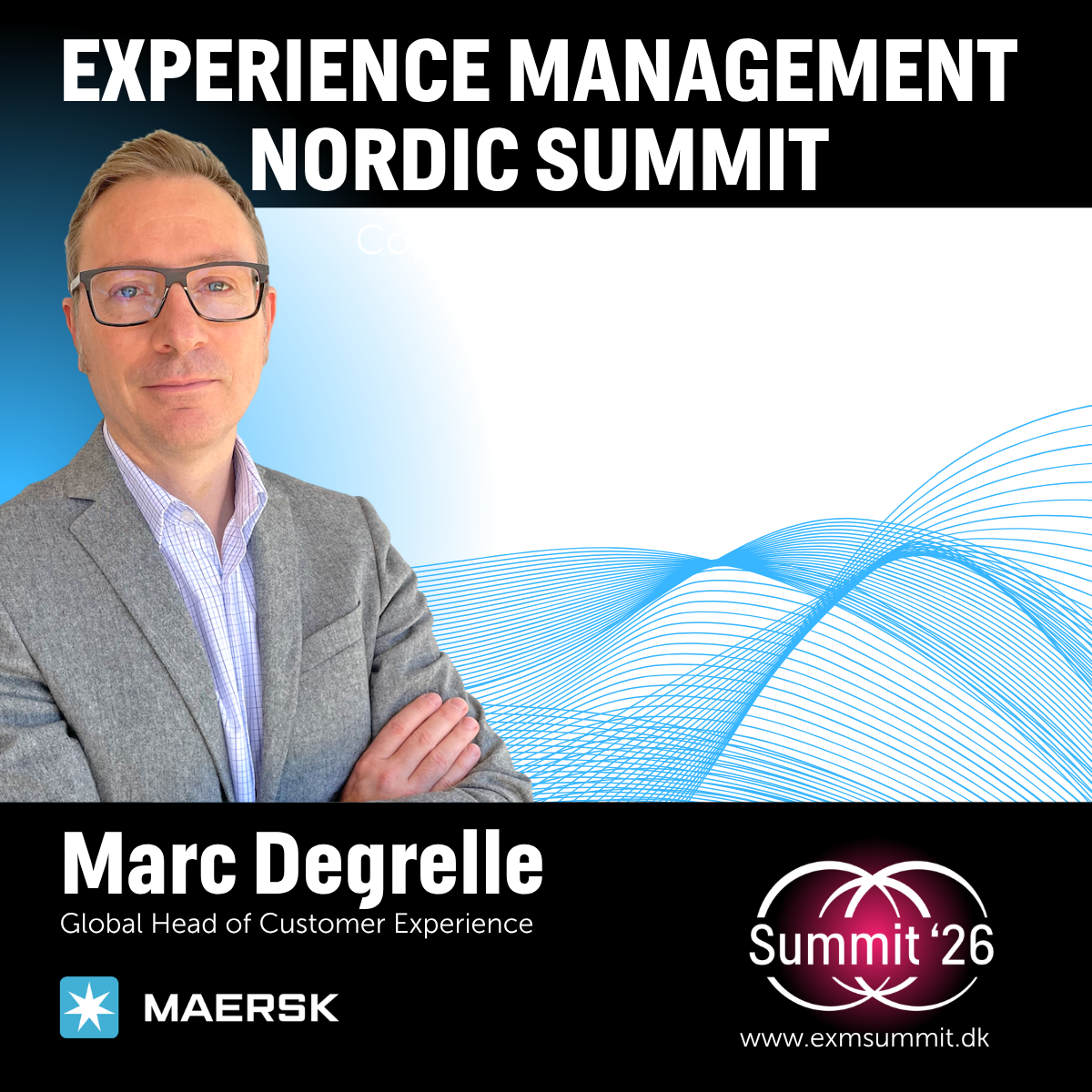
Marc Degrelle
Keynote speaker
Experience Management Nordic Summit
MAY 7 2026 I COPENHAGEN
Johnnie and Marc are both keynote speakers in the Summit theme block: "Service Culture as a Growth Driver."
The starting point for this theme blok: most culture initiatives die between the boardroom and the frontline. The strategy is clear. The values are on the wall. But nothing changes in how people actually work.
Degrelle's argument is that culture, technology and process have to be aligned so they reinforce each other. You cannot change behaviour with culture programmes alone. And you cannot sustain it unless service culture is connected to revenue growth, account retention and market expansion.
At Maersk, he is three years into doing exactly that across 100,000 employees in 180 countries. He will share what worked, what failed, and what he would prioritise differently in year one versus year three.
The pattern behind cultures that last
Two very different industries. One shared insight: service culture is not built in a training room. It is built in the operating model. In how you hire, onboard, structure daily work and define what good looks like before anyone stands in front of a customer.
The organisations that get this right do not have better workshops. They have better foundations. Training is the finishing layer, not the starting point.
If your service culture keeps resetting to zero after every initiative, the problem is probably not the initiative. It is what sits underneath it.
Marc Degrelle and Johnnie Muller both speak at Experience Management Nordic Summit on 7 May in Copenhagen. Two leaders, two very different operating realities, one question: how do you build a foundation that makes service initiatives last and pay off?